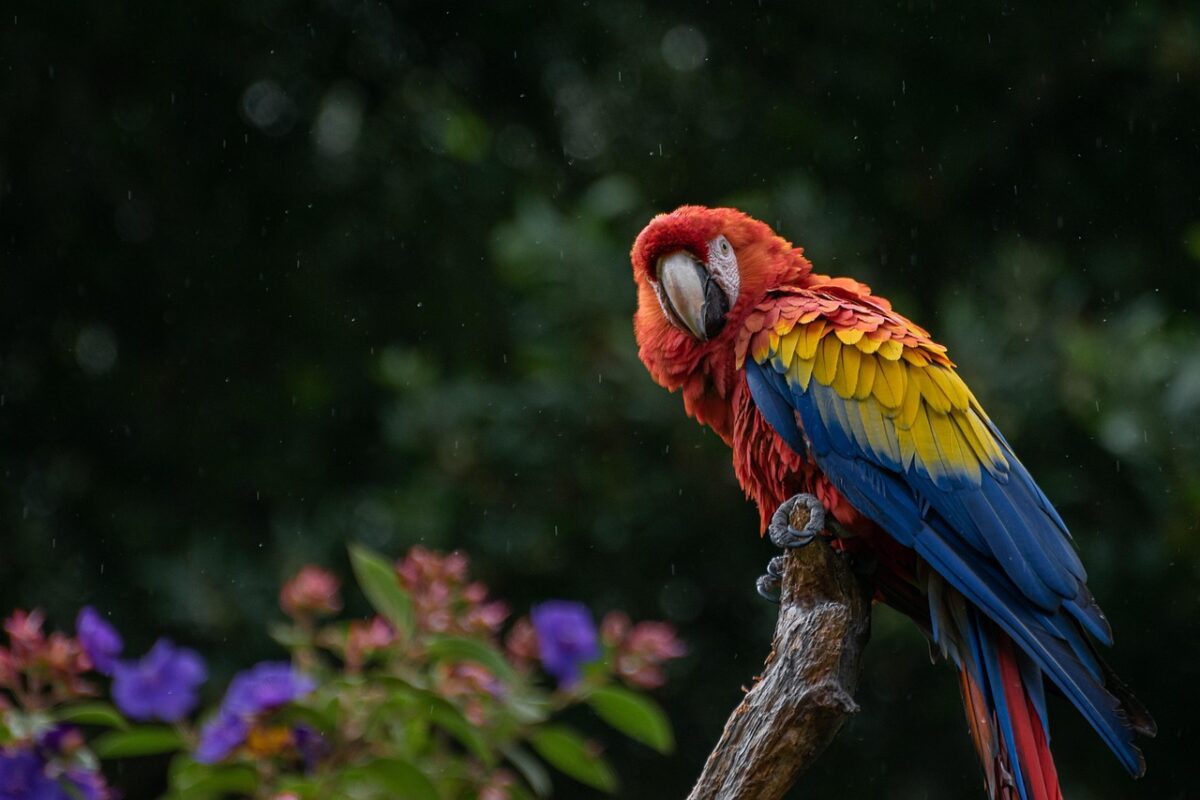
People describe parrot bites as coming from nowhere. They rarely do. Birds signal intention clearly and continuously; the signals are just small and fast, and easy to miss if you are not looking for them. Learning four of them will prevent most of the bites in a normal household.
The eyes
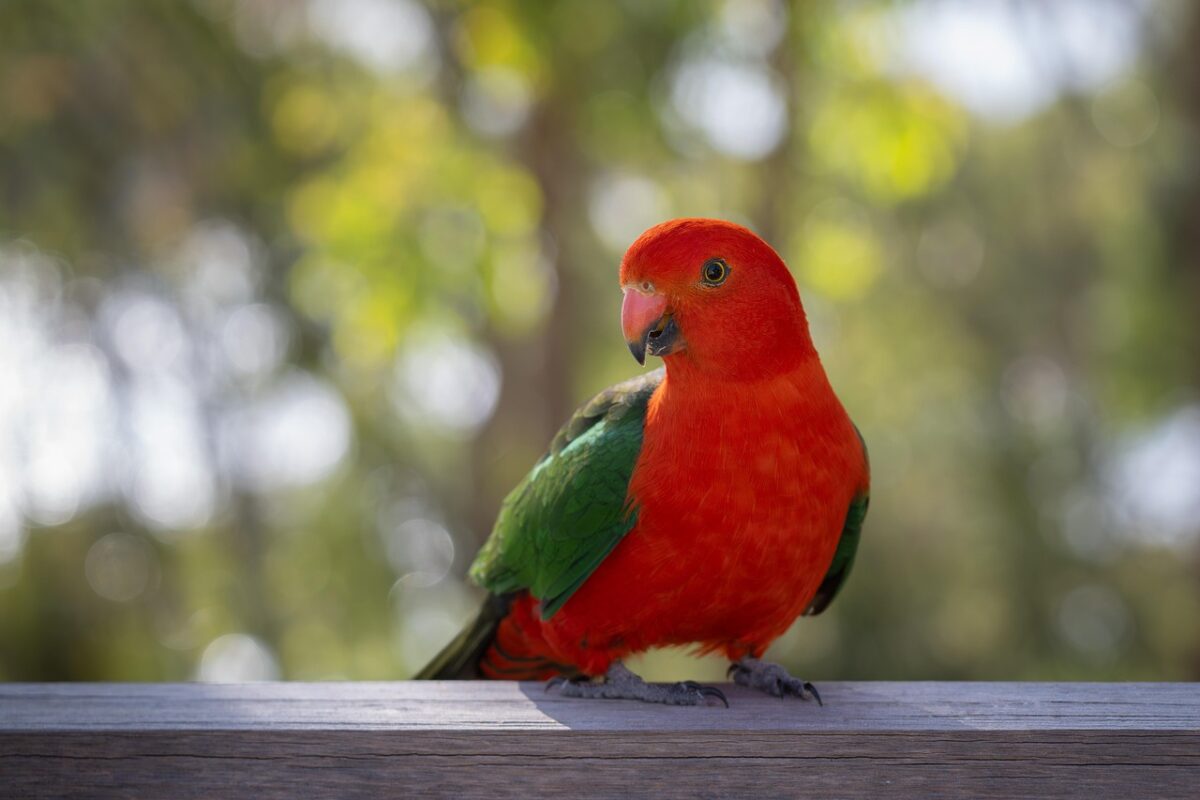
Parrots can control their iris independently of light, contracting and expanding the pupil rapidly. This is usually called pinning or flashing.
Pinning is an arousal signal, not an emotion in itself. It can mean excitement, intense interest, or that the bird is about to act — including aggressively. Read it together with the rest of the body. Pinning with relaxed feathers and a loose stance is an interested bird. Pinning with feathers held tight and the body leaning forward is a warning.
The feathers
Feather position is the fastest-changing signal a bird has.
- Loose and slightly fluffed, especially the cheeks: relaxed and comfortable.
- Held flat against the body: alert or frightened, making the outline as small as possible.
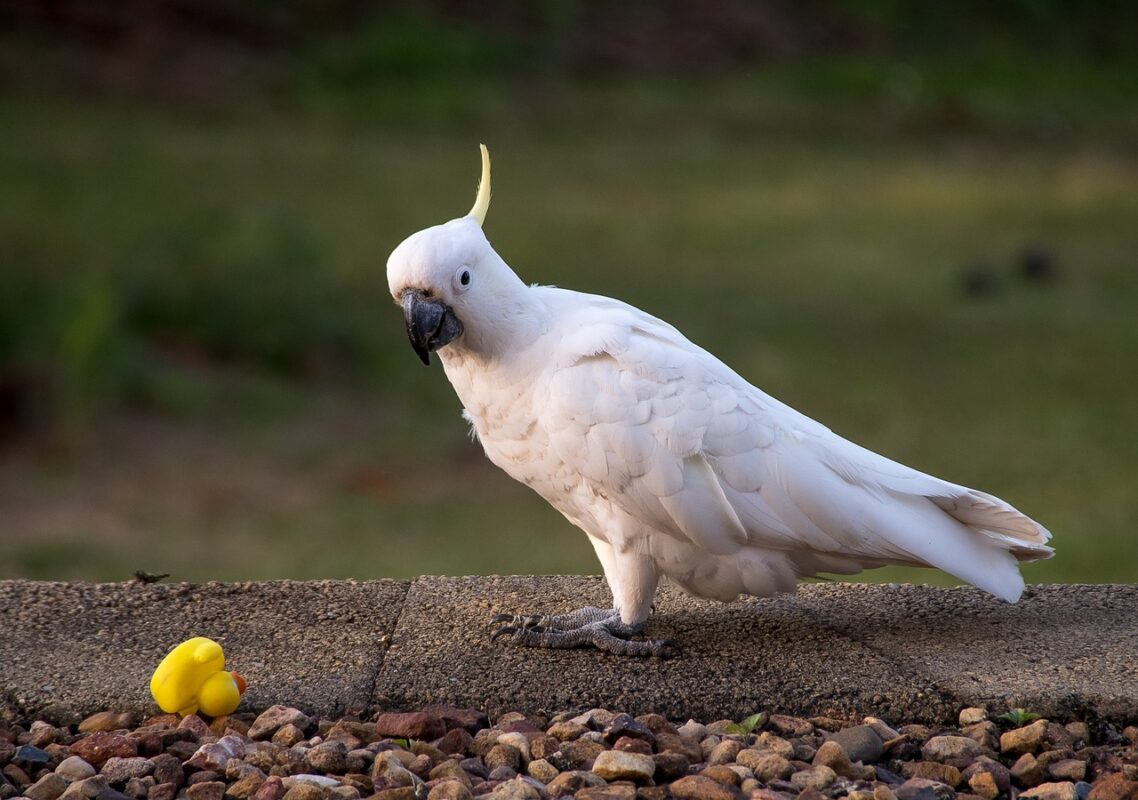
- Raised on the nape and shoulders: defensive or threatening. This is a genuine warning.
- Fully puffed while sitting still with both feet down for long periods: possible illness, not communication. Worth a vet call.
The nape raise is the one to learn first. Almost no bird bites without it.
Stance and balance
A relaxed bird stands with weight distributed and often rests one foot. Weight forward on both feet, head low and beak slightly open is a lunge posture. Leaning away with head turned is avoidance — the bird is asking for space, and continuing to press is how avoidance turns into a bite.
A bird backing into a corner of the cage has run out of options and will defend itself. Withdraw and try again later.
The beak
Beak grinding — a soft, dry, scraping sound, usually at dusk — is a contentment signal and a good sign. Beak wiping on a perch after eating is normal grooming.
A beak held slightly open with the tongue visible while the body is tense is not a yawn. It is a threat display, and it comes a second or two before a lunge.
Cage territoriality
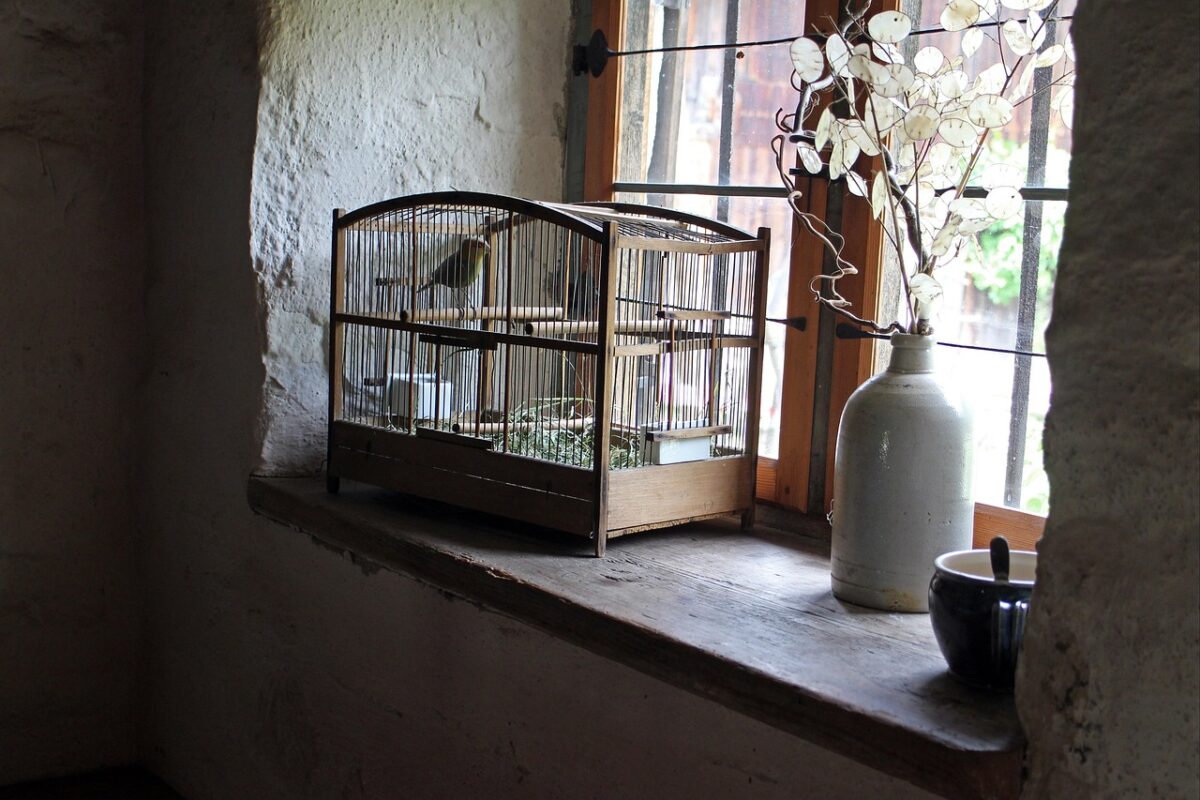
A great many household bites happen at the cage door. Many birds are markedly more defensive inside the cage than outside it, and a hand entering their space is an intrusion regardless of whose hand it is.
The practical fix is to let the bird come out to you. Open the door, let it step onto the doorway or the top, and ask for a step-up there. Handling almost always goes better a foot away from the cage than inside it.
Hormonal seasons
Behaviour changes through the year. Longer daylight, rich food and access to enclosed dark spaces all push birds into breeding condition, and a hormonal bird is more territorial, more possessive of a favourite person, and quicker to bite.
Practical adjustments: keep the daylight period to around twelve hours by covering the cage in the evening, remove nest-like spaces such as boxes and fabric huts, avoid stroking down the back and under the wings, and keep high-fat treats occasional. This is a season, not a personality change, and it passes.
What to do in the moment
When you see a warning, stop and give space. Do not pull your hand back sharply — sudden movement escalates. Move slowly and steadily out of range.
If a bite does land, put the bird down calmly and walk away. Shouting, flicking the beak or dropping the bird teaches fear of hands, and a bird that is frightened of hands bites more, not less.
Building trust instead
Bites decrease when a bird has choice and predictability. Ask for a step-up rather than scooping. Approach at eye level rather than from above, which is how predators arrive. Keep sessions short and end them while things are still going well.
Occupation helps as much as handling. A bird with real work to do — foraging and shredding toys, varied perches to move between, something to watch at a window feeder — is a calmer bird, and calm birds have longer fuses.
When it is not behaviour
A sudden change in temperament in a previously steady bird deserves a veterinary appointment before a training plan. Pain makes animals defensive, and birds conceal illness until it is advanced. Sudden biting, alongside changes in droppings, appetite or posture, is a medical question first.
We are happy to talk through a specific bird — get in touch. See the FAQ for common questions, or browse the range.
From our shelves
Products in this store that relate to what is covered above:
Prices are in US dollars. Delivery timings are on our shipping policy page and the return and refund policy sets out the window if something is not right.
Key points
- Eye pinning is arousal, not emotion — read it together with feather position and stance before deciding what it means.
- Feathers raised on the nape and shoulders is the clearest warning a parrot gives. Almost no bird bites without it.
- A beak held open with the tongue visible while the body is tense is a threat display, not a yawn.
- Most household bites happen at the cage door; ask for the step-up outside the cage rather than reaching inside it.
- Hormonal seasons make birds territorial. Twelve hours of dark, no nest-like spaces and no stroking down the back all help.
- A sudden change in temperament in a steady bird is a veterinary question first, because pain makes animals defensive.
Related reading