Most of what makes a bird settle well in its first fortnight is decided before it arrives. Cage size, bar spacing, where the cage stands and how the first few days are handled matter more than anything you buy afterwards.
Size: wider beats taller
Birds fly horizontally. A tall narrow cage looks generous and gives very little usable space, because the bird can only move up and down. Prioritise width, then depth, then height.
The working minimum is enough width for the bird to extend both wings fully without touching the bars, with perches in place. That is a minimum, not a target — cages are one of the few purchases where nobody has ever regretted going larger.
Bar spacing and orientation
Spacing has to be narrow enough that the bird cannot get its head through, and that is the measurement to check rather than the overall size.
- Finches, canaries, budgies: around 3/8 to 1/2 inch.
- Cockatiels, small conures: around 1/2 to 5/8 inch.
- Larger parrots: 3/4 to 1 inch, with heavier gauge bar.
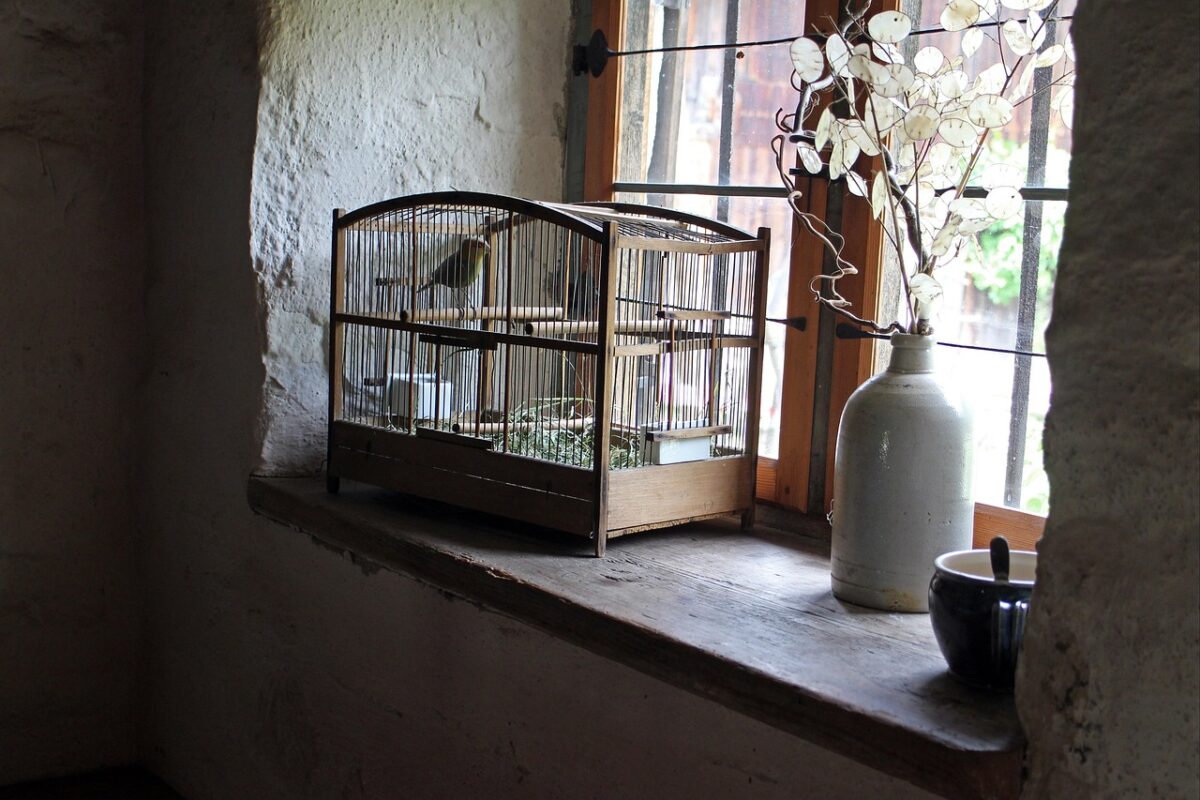
Horizontal bars on at least two sides let a bird climb, which most species enjoy and which adds usable space. All-vertical bars give nothing to grip.
Materials and safety
Stainless steel is the durable answer and the expensive one. Powder-coated steel is the common compromise and is fine while the coating is intact — inspect older or second-hand cages for chips, because exposed zinc is toxic. Avoid galvanised wire entirely.
Check the door catch. Many parrots open a simple latch within a week, and an escaped bird in a kitchen is a serious situation.
Where to put it
Against a wall rather than free-standing, so the bird has a solid side to feel secure against. In a room the household uses, because birds are social and isolation causes problems. At roughly chest height — floor level feels unsafe, and well above head height makes handling awkward and can encourage territorial behaviour.
Away from the kitchen. This is not a preference: fumes from overheated non-stick cookware are rapidly fatal to birds, and kitchens also produce heat and smoke.
Out of direct sun and away from draughts, radiators and exterior doors.
What goes in before the bird does
- Three perches of different diameters and textures, with the best one highest — see our perches and swings.
- Food and water bowls positioned so nothing perches directly above them.
- Two or three toys, no more. A cage packed with new objects is intimidating.
- Plain paper liner so droppings are easy to read.
- A cuttlebone clipped to the bars.
Leave space in the middle. Clear air is not wasted space; it is where the bird stretches and flaps.
The first week
Expect a quiet, watchful bird. Let it settle without handling for the first two or three days — sit nearby, talk normally, go about your business. The aim is for your presence to become unremarkable.
Keep to a routine. Feeding, cleaning and covering at the same times each day gives a new bird something predictable to anchor to. Cover the cage at night for around twelve hours of dark; sleep deprivation makes birds irritable and, over time, hormonal.
Introduce handling gradually, starting with a hand resting near the cage, then inside it, then a step-up request at the doorway rather than deep inside the cage.
What to leave until later
Foraging puzzles, swings, extra perches and rotation toys can all wait a fortnight. So can visits from friends who want to meet the bird. Adding things slowly gives you a chance to see what this particular bird likes, and gives it a chance to find the cage predictable before it starts changing.
A short shopping list, in order
- Cage, correct bar spacing, wider than it is tall.
- Three varied perches.
- Bowls, and a plain paper liner.
- Cuttlebone.
- Two or three starter toys from our chew and foraging range.
- Food appropriate to the species, and a vet appointment for a first health check.
That is the whole day-one list. Everything else is an improvement you can make once you know the bird.
We are on West Cermak Road in Chicago and happy to go through a setup in person or by email — get in touch. Sizes and bird suitability are on every listing on the shop page, and common questions are answered in the FAQ.
From our shelves
Products in this store that relate to what is covered above:
Prices are in US dollars. Delivery timings are on our shipping policy page and the return and refund policy sets out the window if something is not right.
Key points
- Birds fly horizontally: prioritise width over height. A tall narrow cage looks generous and gives little usable space.
- Check bar spacing rather than overall size — narrow enough that the bird cannot get its head through, with horizontal bars on at least two sides.
- Site the cage against a wall, at chest height, in a room the household uses, and never near the kitchen.
- Furnish with three varied perches, bowls clear of anything above them, a cuttlebone and only two or three toys.
- Leave the middle of the cage clear so both wings can open fully; flapping in place is real exercise for a caged bird.
- Allow twelve hours of dark and hold to a fixed daily routine from the first week — sleep is the most overlooked variable in bird behaviour.
Related reading