Someone brings a shredded toy back to the counter every few weeks, disappointed that it lasted a fortnight. It is a reasonable reaction and a misunderstanding of what the product is. A shredding toy that survives untouched has failed. One that is destroyed has done exactly its job.
Shredding is not incidental damage. In the wild, parrots strip bark, tear leaves and dismantle seed pods for a large part of the day. That behaviour does not disappear in a living room; it just needs a legitimate target, and if you do not supply one the bird will nominate your window frame.
What the materials do
Sola
Dried pith from a wetland plant. Extremely light, soft, and easy to tear, which makes it the best starting material for a bird that has never shredded. It carves easily, so it turns up as balls, stars and hearts. It goes fast, and that is the point.
Loofah
The dried skeleton of a gourd. Fibrous and springy, it takes more work than sola and gives resistance the bird has to pull against. Good for a bird that has got the idea and wants more effort.
Corn husk and palm leaf
Tough, flexible, and satisfying to strip lengthways. These weave well, so they appear as mats and rolled bundles that can be stuffed with treats — shredding and foraging in one object.
Yucca and balsa
Soft woods that splinter into fibres rather than shards. They bridge the gap between shredding material and hardwood chewing, and they suit medium birds well.
Cuttlebone
Not shredding material, but it belongs in the same category of things a bird works on. It supplies calcium and it wears the beak. Every cage should have one.
Our chew and foraging toys name the materials on every listing, because “natural fibre” tells you nothing about how quickly it will go.
Budget for consumables, not for furniture
The useful way to think about it is a monthly consumable line, like bedding or food, rather than a one-off purchase. A small bird might get through two or three shredding toys a month; a determined large parrot rather more.
Multi-piece sets and bundles exist because of this. Buying eight small items at once is both cheaper per toy and better for rotation than buying one substantial toy that has to last.
Rotation makes them last longer in practice
Four toys left in permanently become invisible within a fortnight, and a bored bird will destroy them without much interest. The same four, with two in the cage at a time and a weekly swap, hold attention far longer and are actually consumed more slowly.
Keep a box out of the cage, swap on a fixed day, and inspect each toy as it comes out.
Safety while it is being destroyed
A toy changes shape as it is dismantled, and the hazards appear late rather than early.
- Loops and long fibres. As woven material unravels, it forms loops that catch toes. Trim frays as they appear.
- Hardware left behind. Once the shreddable part is gone, the remaining plastic or metal frame is no longer a toy. Remove it.
- Split rings. Beaks and toes jam in them. Screw-gate quick-links are the safer fixing and are what we use.
- Small hard fragments. Sweep the cage floor when a toy is in its final stages.
What not to give
Avoid anything treated, dyed with non-food-safe colour, or made from wood that may have been chemically preserved. Do not repurpose household cardboard with printing or tape on it. And avoid cotton rope with long loose strands for birds that pull threads rather than chew them.
If a bird eats the material rather than dropping it, watch closely. Shredding is normal; consuming volume is not, and it is worth a vet conversation.
Getting a reluctant bird started
Some birds ignore shredding toys at first, usually because the toy is unfamiliar. Try hanging it outside the cage for a day so it is not an intrusion, choosing a lighter material like sola, or hiding a favourite treat inside so there is a reason to start.
Chewing is often social. A bird that sees you handling and picking at a toy is far more likely to try it.
Putting it together
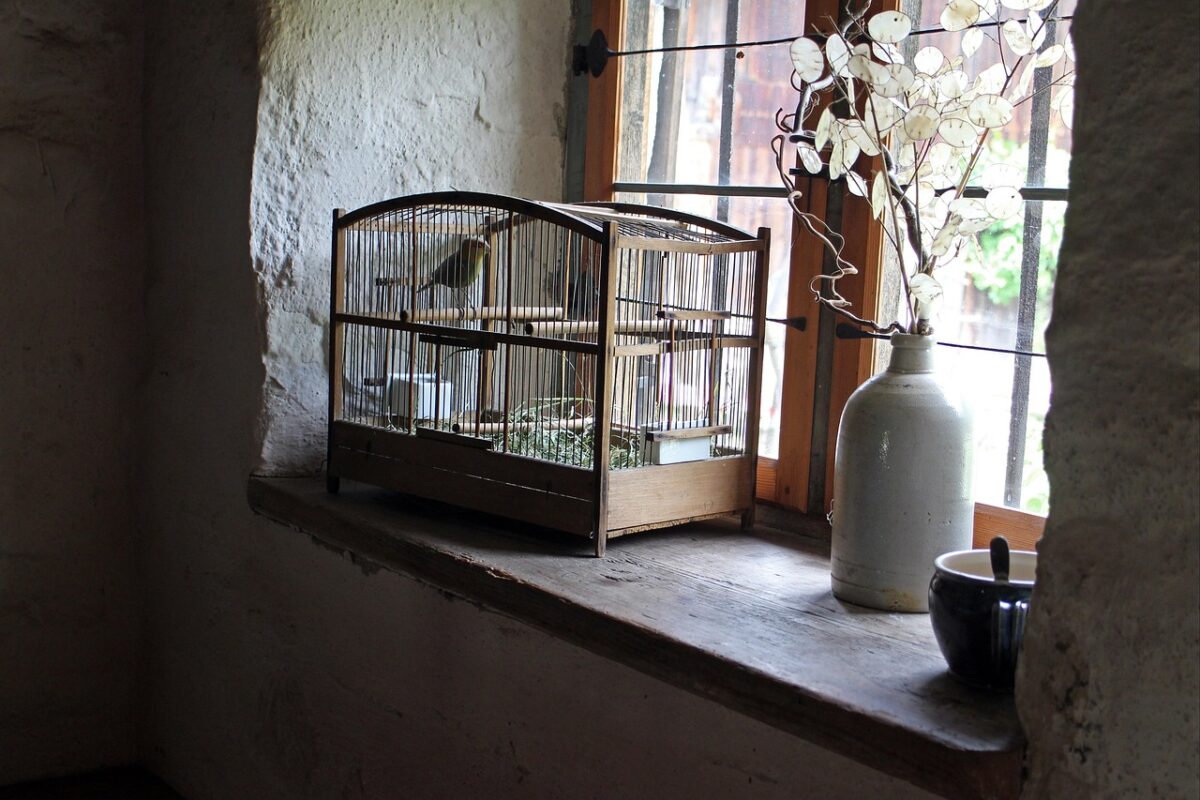
A working cage has something to shred, somewhere varied to stand, and a reason to move between them. Pair the toys with perches at different heights so the bird has to travel to reach them, and if it spends time at the window, a feeder adds another focus.
Materials and bird sizes are on every listing. The FAQ covers the usual questions, the full range is on the shop page, and you are welcome to ask us about a specific bird.
From our shelves
Products in this store that relate to what is covered above:
Prices are in US dollars. Delivery timings are on our shipping policy page and the return and refund policy sets out the window if something is not right.
Key points
- A shredding toy that survives untouched has failed. Judge soft materials on whether they are used, not how long they last.
- Sola is the easiest starting material, loofah and husk take more work, and hardwood is for large beaks only.
- Budget shreddables as a monthly consumable line alongside food and bedding, not as a one-off purchase.
- Rotate two toys a week: rotated toys hold attention longer and are consumed more slowly than toys left in permanently.
- The hazards appear late — trim frays as weaving unravels, and remove the frame once the shreddable part is gone.
- Use screw-gate quick-links rather than split rings, and never repurpose printed or taped household cardboard.
Related reading