Birds have an extremely efficient respiratory system, and that efficiency cuts both ways: they extract more oxygen per breath than a mammal, and they also absorb more of whatever else is in the air. It is why canaries were taken down mines, and it is why cage hygiene and household air quality matter more for birds than for any other pet.
The good news is that the routine is short. Ten minutes a day and half an hour a week covers almost all of it.
Daily: ten minutes
- Change the cage liner. Plain paper is ideal — it lets you see droppings clearly, and droppings are the single most useful daily health indicator you have.
- Wash food and water bowls. Hot water and a brush, every day, not a rinse. Biofilm builds in water bowls within 24 hours.
- Remove fresh food after a few hours. Fruit and vegetables spoil quickly at room temperature and are a bacterial risk in warm weather.
- Scrape visible droppings from perches and the bars near favourite spots.
Watching droppings is the part worth doing attentively. Changes in colour, volume or consistency, sustained over a day or two, are often the earliest sign of illness in a species that hides symptoms well.
Weekly: half an hour
- Full grate and tray clean, including underneath.
- Wipe the bars — the ones near perches and the food station carry most of the mess.
- Wash or scrub perches. Natural wood should be dried fully before it goes back.
- Wash fabric items and check rope perches for fraying.
- Rotate toys, which is the moment to inspect them for wear.
Monthly and seasonally
Once a month, take the cage apart as far as it comes and clean the joints and corners where seed dust packs in. Once a season, inspect for chipped paint or exposed metal — a damaged coating on an older cage can expose zinc, which is toxic to birds.
Cleaners: what is safe
Hot water and physical scrubbing does most of the work. Where you want a disinfectant, a dilute white vinegar solution is a sensible household option, and there are avian-specific products designed for the job.
Do not use bleach in an enclosed space with the bird present, ammonia-based cleaners, pine or phenol disinfectants, or anything scented. Whatever you use, remove the bird from the room, rinse thoroughly, and let everything dry completely before it goes back.
The bigger air-quality question
Cage hygiene is half the picture. The other half is what else the bird is breathing.
Non-stick cookware is the one that kills birds outright. PTFE coatings release fumes when overheated that are rapidly fatal, and the bird does not have to be in the kitchen. Self-cleaning oven cycles are the same hazard. If there is a bird in the house, the safest answer is not to have PTFE cookware in it.
Also worth removing from a bird household: aerosol air fresheners, scented candles, plug-in fragrance units, and smoking indoors. Fresh paint, new carpet and strong cleaning products all warrant moving the bird to another room with the windows open.
Dust, and why it matters here
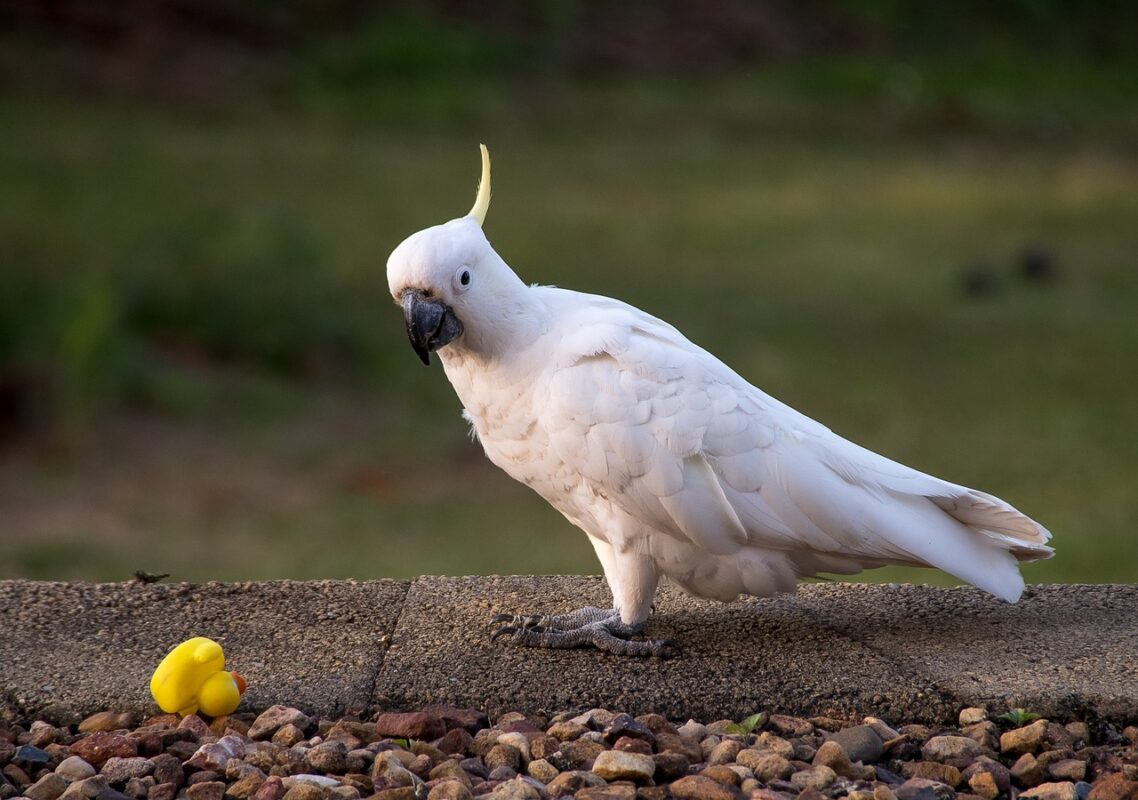
Cockatiels, greys and cockatoos produce powder down, and in a closed apartment that accumulates. An air purifier with a HEPA filter in the bird’s room is one of the few pieces of equipment that genuinely earns its place, both for the bird and for anyone in the household with asthma.
Vacuum rather than sweep. Sweeping puts the dust back into the air.
Bathing is part of hygiene
Most birds bathe readily given the chance, and a bird that bathes has better feather condition and produces less loose dust. Offer a shallow dish, a light mist, or a shower perch two or three times a week. Use plain water at room temperature; nothing needs to be added to it.
Bathe in the morning so feathers are dry well before nightfall.
Setting the cage up to stay clean
A few placement choices cut the daily work substantially. Keep perches away from directly above bowls. Put the food station where you can reach it without dismantling the cage. Site the cage against a wall rather than in the middle of a room, out of draughts and away from the kitchen entirely.
Our perches and toys are listed with dimensions so you can plan clearances before ordering, and window feeders give an indoor bird something to watch without adding mess inside.
Questions are welcome — write to us or see the FAQ. The full range is on the shop page.
From our shelves
Products in this store that relate to what is covered above:
Prices are in US dollars. Delivery timings are on our shipping policy page and the return and refund policy sets out the window if something is not right.
Key points
- Ten minutes daily — liner, bowls washed properly, fresh food removed, droppings scraped — covers most of cage hygiene.
- Use plain paper as a liner so droppings stay readable; changes in colour or consistency are often the first sign of illness.
- Wash water bowls with a brush every day. Biofilm forms inside 24 hours and a rinse does not remove it.
- Never use bleach in an enclosed space with the bird present, and avoid ammonia, pine, phenol and anything scented.
- PTFE non-stick cookware and self-cleaning oven cycles are rapidly fatal to birds anywhere in the home — this is the single most important household rule.
- Offer a bath two or three times a week in the morning; a bird that bathes has better feathers and produces less airborne dust.
Related reading